
What Skipping This Costs You
Put off a fall inspection and the bill usually shows up at the worst possible moment: a spring snaps while you're backing out for work, a panel that's been quietly swelling from months of humidity finally buckles, or an opener motor that's been straining against a misaligned track burns out in your driveway. A $20 tube of lubricant and twenty minutes of attention now is a lot cheaper than an emergency spring replacement or a new opener unit later. Garage doors in Lake County take a beating during hurricane season that most homeowners never see until the door stops working right.
What Hurricane Season Leaves Behind
Before you think about winter, you need to know what summer's storms did to your door. Months of afternoon downpours, high humidity, and wind push moisture into places it shouldn't be. Common damage includes:
- Rust on springs and hardware from repeated wet-dry cycles, even on doors that look fine from the driveway.
- Swollen or warped panels, especially on wood or wood-composite doors, where trapped moisture makes seams stick or doors drag along the track.
- Corroded photo-eye sensors near the bottom of the tracks, which can cause the door to reverse randomly or refuse to close.
- Loosened fasteners and brackets from vibration during high winds, which can shift a track out of alignment without any obvious visible sign.
If your home is closer to the coast, add salt air corrosion to that list. It accelerates rust on springs, hinges, and tracks faster than inland moisture alone, so hardware that looks fine in spring can be pitted and weak by fall.
Why Cooler, Drier Air Changes How Your Door Moves
Central Florida doesn't get harsh winters, but the shift from hurricane-season humidity to the drier, cooler air that follows does change how your garage door behaves. Metal components that expanded slightly in heat and moisture contract as temperatures and humidity drop. Wood panels that swelled can shrink back, sometimes unevenly, which changes how a door sits in its frame. The practical result: a door that closed smoothly in August may suddenly feel tight, loose, or slightly off-track in November, not because something broke, but because the materials moved.
This is also when small gaps show up around the bottom seal and side weatherstripping. They're easy to ignore in summer heat, but once cooler nights arrive, those gaps let in drafts, dust, and small pests looking for a dry place to shelter.
A Fall Tune-Up Checklist
Work through this before the first real cold front rolls through:
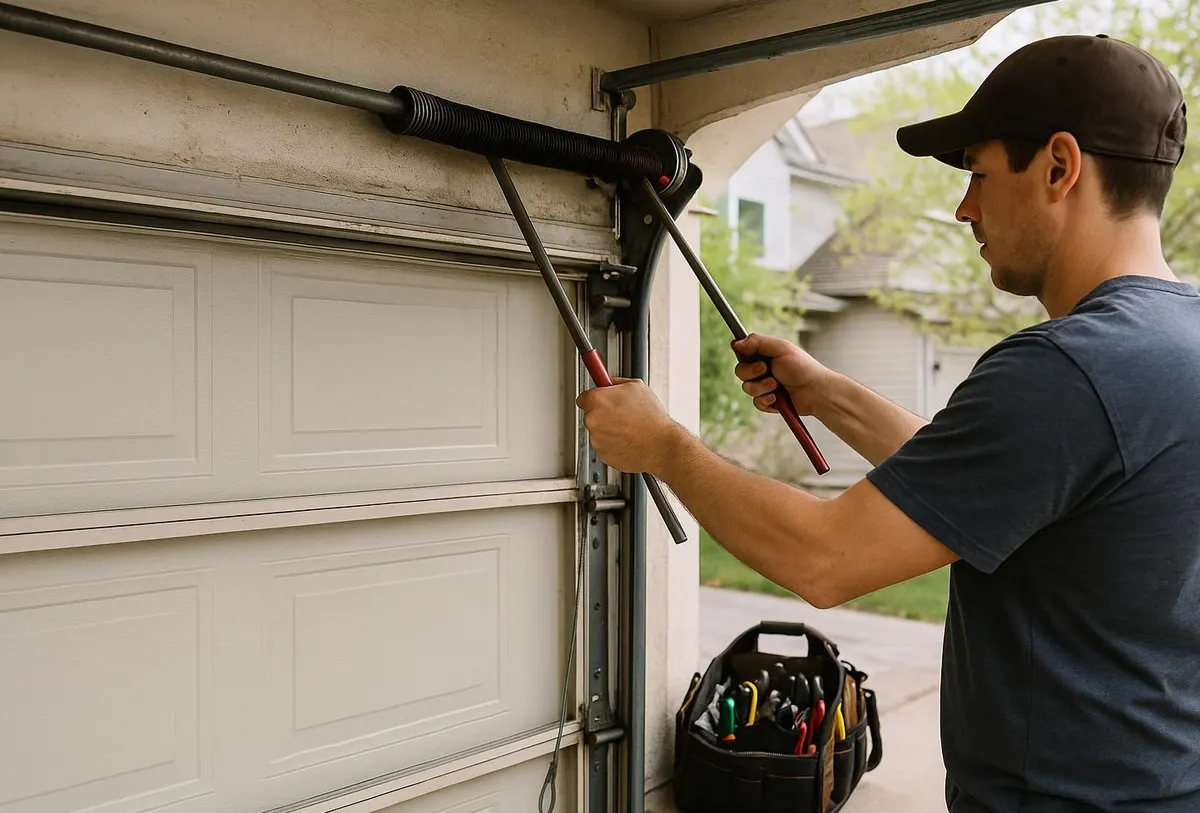
- Inspect springs and cables closely. Look for rust flaking, visible pitting, or fraying strands on cables. Don't attempt to adjust or replace springs yourself — they're under high tension and a common source of serious injury.
- Test the balance. Disconnect the opener, lift the door halfway by hand, and let go. It should stay roughly in place. If it drifts up or crashes down, the springs are no longer balanced correctly for the door's weight.
- Lubricate rollers, hinges, and tracks with a garage-door-specific lubricant, not household oil, which attracts dust and grime.
- Check and clean the photo-eye sensors on both sides of the track near the floor. Wipe off any corrosion or grime and make sure they're aligned — a blinking opener light often means they're not.
- Examine weatherstripping along the bottom and sides for cracking, gaps, or sections that have pulled away. Replace any that's brittle from UV exposure.
- Tighten hardware — brackets, hinges, and track bolts — that may have loosened from storm vibration or routine use.
- Check panel seams for water staining or swelling, particularly near the bottom panel, which takes the most splashback from heavy rain.
If your door has wind-load reinforcement, this is also a good time to confirm the bracing and reinforcement struts are still intact and properly fastened, since storm-season stress is exactly what they're designed to absorb.
When to Call Precision Garage Door of Eustis
Some of this is safe DIY work — cleaning sensors, lubricating moving parts, wiping down tracks. But if you spot rust on a spring, notice cables fraying, or the door doesn't pass the balance test, it's time to call in a technician. Our Garage Door Spring Repair service handles worn or corroded springs safely, with the right tools and tension equipment to avoid injury. If storm season left your door dragging, binding, or visibly out of alignment, our Off Track Door Repair service resets the rollers and tracks so the door runs smoothly again instead of straining the opener. A full tune-up visit covers both diagnosis and the small adjustments that keep a door running well through the cooler months ahead.
If your garage door has been acting a little off since summer's storms, don't wait for it to get worse. Call Precision Garage Door of Eustis today to schedule a fall tune-up and head into winter with a door that opens, closes, and seals the way it should.