
The Moment You Hear It
You press the opener button and nothing happens, or the door only lifts a few inches before stalling. Maybe you heard a loud bang from the garage earlier that day and figured it was just the humidity-swollen wood settling. Then you look up and see it: a gap in the coiled spring above the door, or one half of it hanging loose from the bracket. That's a broken garage door spring, and it's the moment most homeowners decide to search for a repair video and handle it themselves over the weekend.
Don't. This is one of the few home repairs that routinely sends people to the emergency room, and the reason has nothing to do with skill level. It's physics.
Why a Garage Door Spring Is So Dangerous
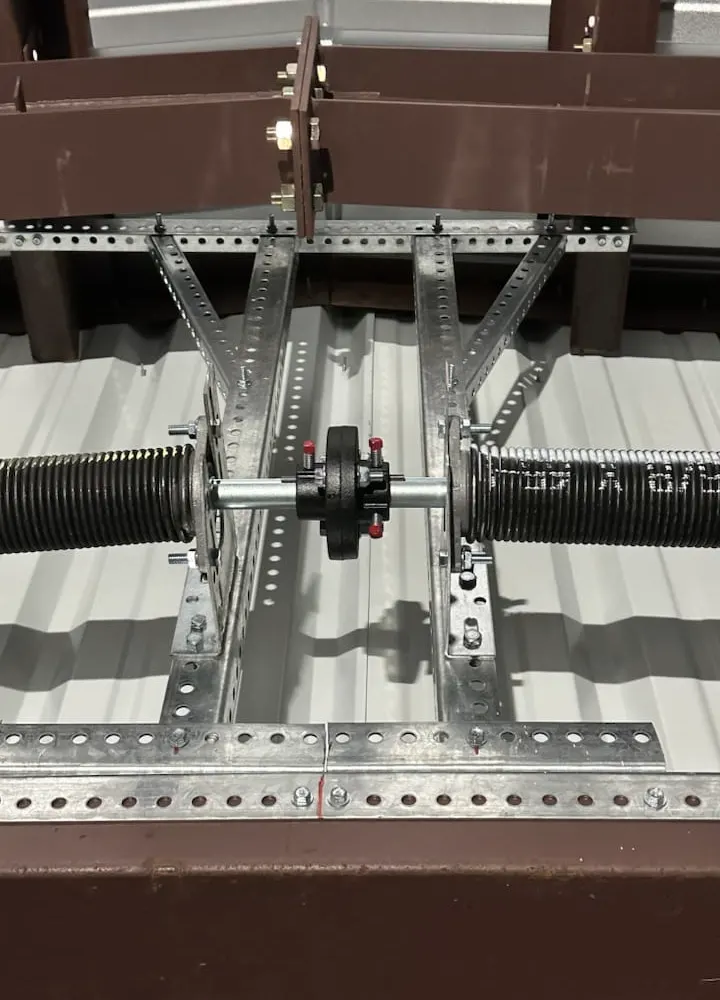
A standard torsion spring holds enough tension to lift a door that weighs 130 to 400 pounds, sometimes more for a double-wide. That tension doesn't go away when the spring breaks or when you start unwinding it. It's stored in tightly wound coils that are only a few inches from your hands, your face, and your torso while you work.
When a spring is improperly unwound, or when it fails while under load, it releases that energy instantly. Winding bars can be ripped from a person's grip and thrown across the garage. The spring itself can uncoil violently, striking whatever is in its path. People have lost fingers, suffered broken bones, and sustained serious facial and eye injuries from a job that looked, on video, like a 20-minute fix with a wrench and a pair of winding bars.
What Actually Goes Wrong
- Using the wrong winding bars: Screwdrivers or makeshift tools slip out of the winding cone under tension, sending the bar flying.
- Misjudging the wind count: Too many or too few turns changes how the door balances and how much stored energy is in the coil when something gives way.
- Working on both springs at once: Many doors have two torsion springs. Releasing tension on one while the other is still loaded can cause the shaft to spin unpredictably.
- Standing in the line of force: Instinct puts your hands and face right where the coil will travel if it slips.
- Reusing a mismatched spring: Springs are rated by wire size, diameter, and length for a specific door weight. The wrong spring can fail within days under full tension.
Signs the Spring Is Already in Trouble
You don't have to wait for a full break to know something's wrong. Watch for these before you're standing in the garage at a dead stop:
- The door feels heavier than normal when lifted manually with the opener disconnected.
- A visible gap appears in the coil, even if the door still opens.
- You hear a loud bang, like a gunshot, from the garage. That's almost always a spring letting go.
- The door opens unevenly, one side higher than the other, or it reverses partway through the cycle.
- Rust or pitting is visible on the coils. Humidity and the swings between damp mornings and hot afternoons common in this part of Florida accelerate corrosion, especially on doors that aren't opened and closed regularly or that sit close to standing moisture.
Any of these mean the spring is nearing the end of its life, not that it needs a home remedy to squeeze out a few more weeks.
What to Do Instead
- Stop using the door. Disconnect the opener if the spring has already broken, since forcing a motor against a dead spring can burn it out or snap a cable.
- Don't lubricate your way around the problem. Spray lubricant quiets a noisy spring temporarily but does nothing for a coil that's cracked, rusted through, or undersized for the door.
- Check the cables too. A failing spring puts extra strain on the cables that run the drums on either side of the door. If a cable has frayed strands, that's a second point of stored tension that can whip loose.
- Leave the winding bars in the toolbox. Spring tensioning is a two-person job for trained technicians who know the wind count, the torque, and the exact positioning that keeps hands clear of the coil's travel path.
When to Call Precision Garage Door of Eustis
If you've noticed a gap in the coil, heard that telltale bang, or the door simply won't budge, it's time to call. Our technicians handle Garage Door Spring Repair with the correct replacement spring rated for your door's exact weight and the right tools to release and set tension safely. While we're there, we'll also check your Garage Door Cable Repair needs, since a spring failure often means the cables have been under abnormal strain too. We serve homeowners throughout Eustis, Tavares, Mount Dora, Leesburg, Umatilla, Lady Lake, Clermont, and Apopka, and most spring replacements are done same-day so your garage isn't stuck halfway open for a week.
If your garage door spring has broken or looks like it's about to, call Precision Garage Door of Eustis today for fast, safe service in Eustis, FL.